Hot and Cold Slots: Gambling's Most Common Myth, Explained by Science
Hot and cold slots don't exist: every spin is statistically independent. Why we believe it anyway (gambler's fallacy), where the myth comes from, and what actually matters for playing smarter.
Gambling is only permitted for those aged 18 and over. Please gamble responsibly. All casinos mentioned in this article are regulated and licensed by ADM (formerly AAMS), the Italian authority that oversees and authorises legal online gambling in Italy. → Verify the licence on adm.gov.it
"This slot is hot, it's paying!" — one of the most-heard phrases in online gambling, and also one of the most scientifically unfounded. "Hot" and "cold" slots are the industry's most persistent myth. Here's why they don't exist, where this belief comes from and what the maths behind every spin really says.
The Myth: "Hot" and "Cold" Slots
The idea is simple and intuitive: a slot that has paid many recent wins would be "hot" (more likely to keep paying), while one that hasn't paid for a while would be "cold" (destined to keep not paying, or conversely "due" for a win). Both versions of the myth are mathematically false on modern digital slots.
Why It's False: The Maths of Statistical Independence
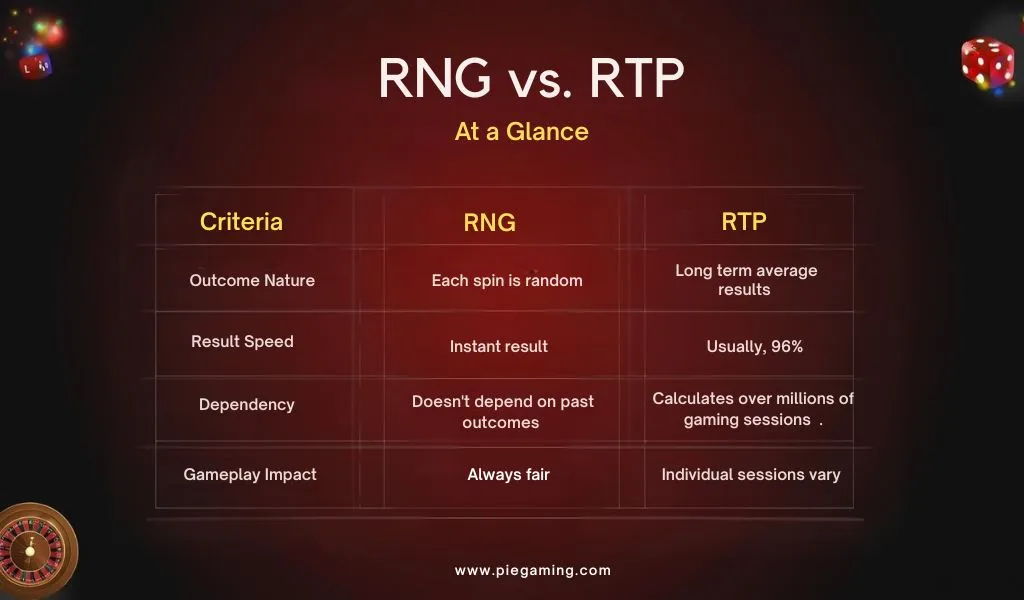
Every spin on an online slot with a certified RNG is a statistically independent event. This means that:
- The result of spin N has no influence on the result of spin N+1.
- The RNG doesn't "know" how many spins have passed since the last win.
- The declared RTP (e.g. 96%) is a value calculated over millions of simulated spins — it guarantees nothing about a single session of a few hundred spins.
The Gambler's Fallacy: Why We All Fall for It
The technical name of this bias is the gambler's fallacy — a cognitive error documented by behavioural psychology since the 1950s. The classic example: on a fair coin toss, after five consecutive "heads", most people intuitively expect "tails" on the sixth toss. Statistically, the probability always stays 50/50 — the coin has no memory.
The same mechanism applies to slots: the brain looks for patterns in random sequences, even when the pattern doesn't exist mathematically.
Where the Myth Historically Comes From
One possible origin: the old mechanical slot machines (pre-1980s) had physical components — springs, reels, electrical contacts — that could actually wear or get dirty over time, marginally influencing the results. Modern digital slots with certified RNG don't have this structural problem, but the cultural myth outlived the technology that (in part) gave rise to it.
What to Do Instead of Looking for Patterns
Focus on what you can actually control: game choice (declared RTP, volatility suited to your budget), bankroll management (a set budget, session limits) and ADM licence verification of the casino. Chasing patterns in a random system doesn't improve the odds — managing your own gambling behaviour well does.

Frequently Asked Questions
Do "hot" and "cold" slots really exist?
Then why do some players swear they've noticed patterns?
Is a slot that hasn't paid for a long time "due" to win?
Do physical slot machines work differently from online ones?
Does switching slots after a losing streak increase the odds?
Where does the hot/cold slots myth come from?
Responsible Gambling
Online gambling should be a form of entertainment, not a source of income. If you feel gambling is becoming a problem, free support resources are available:
- ADM — Responsible Gambling
- GiocoHelpline freephone: 800 558822 (free, 24/7)
- Every ADM casino offers self-exclusion tools, deposit limits and reality-check reminders of time played.