How RNG Really Works: Why Slots Have No Memory (Myth Debunked)
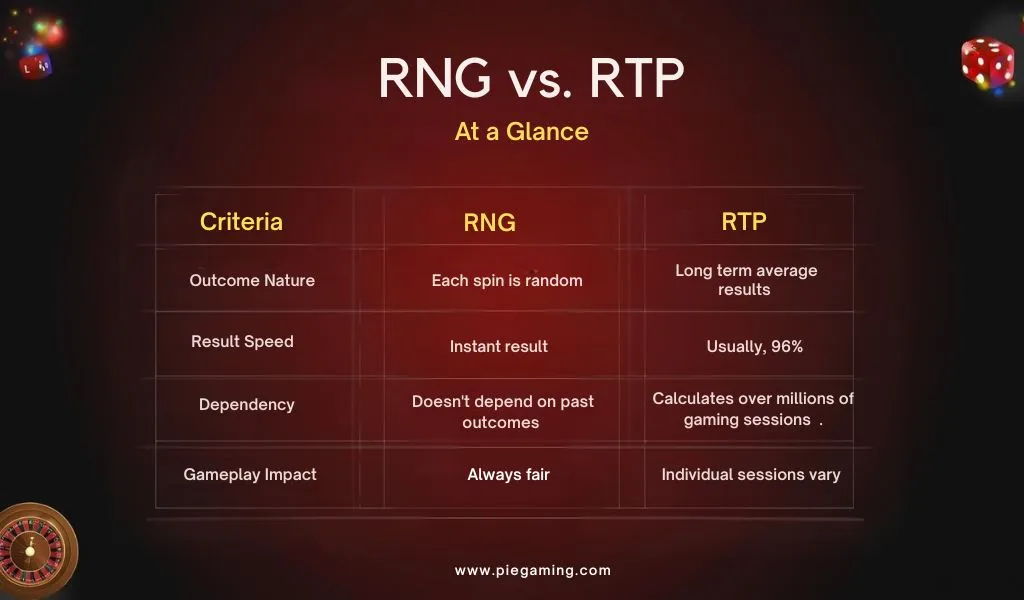
RNG (Random Number Generator) explained: how it really works, why it has no memory, why predictors are always a scam, and how to recognise certified RNG at ADM casinos.
Gambling is only permitted for those aged 18 and over. Please gamble responsibly. All casinos mentioned in this article are regulated and licensed by ADM (formerly AAMS), the Italian authority that oversees and authorises legal online gambling in Italy. → Verify the licence on adm.gov.it
The RNG (Random Number Generator) is the mathematical heart of every slot, digital roulette and crash game — and also the favourite target of myths, urban legends and outright online scams. What the RNG really does, why it has no memory, why "predictors" are always a hoax and how to check that a game is genuinely certified.
What the RNG Is and How It Really Works
The RNG (Random Number Generator) is a mathematical algorithm that generates random number sequences — used to determine the result of every slot spin, every card dealt in digital blackjack, every number drawn on an online roulette. In the modern RNGs of regulated casinos, the algorithm works continuously, even when no one is playing.
The result of your spin isn't "decided" the moment you press Spin: it's determined by the exact millisecond the button is pressed, which corresponds to a specific output of the RNG sequence at that instant.
Certifications: Who Checks the RNG
The RNGs used by ADM-licensed providers are subjected to independent checks by bodies such as:
- eCOGRA — eCommerce Online Gaming Regulation and Assurance, one of the most recognised certification bodies in the industry.
- GLI (Gaming Laboratories International) — statistical uniformity and unpredictability tests.
- iTech Labs — independent certification for RNG and game fairness.
These bodies run uniformity tests (do the generated numbers really follow a random distribution?) and unpredictability tests (is it impossible to predict the next number knowing the previous ones?) on a regular basis — not a single check at the game's launch.
Myth 1: "The RNG Remembers Previous Wins"
False. Every spin is statistically independent. The idea that a slot "must" pay after a dry spell, or that it's "hot" after a recent win, has no mathematical basis — it's a classic example of the gambler's fallacy, the same cognitive bias that leads people to believe that after five consecutive "heads" a coin is "due" for "tails".
Myth 2: "RNG Predictors Work"
False, and dangerous. There are dozens of software and Telegram channels promising to "read" the RNG and predict the next winning result. None of them work on a certified RNG — the algorithm uses cryptographic seeds that change in a way that can't be reproduced externally. Those who pay for these "services" are simply losing more money.
Myth 3: "Playing at Certain Times Increases the Odds"
False. The RNG operates 24 hours a day, 7 days a week, with no distinction of time, day of the week or number of connected players. There's no "best time" to play based on the clock.

How to Recognise a Reliable RNG
Look for the certification logo (eCOGRA, GLI, iTech Labs) in the footer of the provider's or casino's site, and always check that the casino has an active ADM licence on adm.gov.it — it's the prerequisite that guarantees a certified, controlled RNG.
Frequently Asked Questions
What is the RNG?
Can the RNG be modified by the casino to make you lose?
Does the RNG remember previous wins and losses?
Then why does it seem some slots "pay more" at certain times?
Do the "RNG predictors" sold online really work?
How do I check that a game has a certified RNG?
Responsible Gambling
Online gambling should be a form of entertainment, not a source of income. If you feel gambling is becoming a problem, free support resources are available:
- ADM — Responsible Gambling
- GiocoHelpline freephone: 800 558822 (free, 24/7)
- Every ADM casino offers self-exclusion tools, deposit limits and reality-check reminders of time played.