Blackjack: Payouts and Probability (1:1, 3:2, Insurance) Explained
How blackjack pays: win 1:1, blackjack 3:2, insurance 2:1. Why 3:2 vs 6:5 changes everything, why insurance is a trap and how to drop below 0.5% house edge.
Gambling is only permitted for those aged 18 and over. Please gamble responsibly. All casinos mentioned in this article are regulated and licensed by ADM (formerly AAMS), the Italian authority that oversees and authorises legal online gambling in Italy. → Verify the licence on adm.gov.it
Blackjack is among the casino games with the lowest house edge — but only on two conditions: playing with basic strategy and sitting at a table with the right rules. Understanding payouts and probabilities is the first step. Here are the numbers that really count.
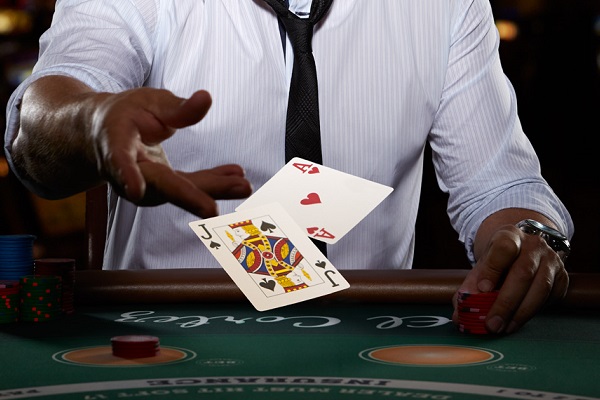
In one line: blackjack pays a normal win 1:1, a blackjack (21 with two cards) 3:2, insurance 2:1. With basic strategy the house edge drops below 0.5%: it is one of the most favourable games — but only if played well and with the right rules.
Blackjack Payouts
| Outcome | Pays | Notes |
|---|---|---|
| Normal win | 1:1 | The hand beats the dealer |
| Blackjack (21 with 2 cards) | 3:2 | Correct standard; avoid 6:5 tables |
| Insurance | 2:1 | Statistically unfavourable |
| Push (tie) | Stake returned | No win or loss |
Typical payouts; exact rules (3:2 vs 6:5, surrender, split) vary by table. Always check before sitting.
The Detail That Changes Everything: 3:2 vs 6:5
The blackjack payout rule is the single most important factor. A 3:2 table is the correct standard; a 6:5 one pays less for the same blackjack and raises the house edge by over 1%. Before playing, check this number: two "identical" tables can have very different value.
Why Insurance Is a Trap
Insurance looks prudent but pays 2:1 against a probability that does not justify it: long-term it loses. Basic strategy clearly advises against it. It is the classic example of a "reassuring" bet with negative expected value.
House Edge: Why Blackjack Is Different
Unlike slots and roulette, in blackjack your decisions matter: when to hit, stand, double, split. With optimal basic strategy and favourable rules, the house edge drops below 0.5% — among the lowest in the casino. But it is an "if": without strategy, the margin grows a lot.

How to Play It Better
- Look for 3:2 tables, avoid 6:5.
- Learn basic strategy: the only way to approach the minimum house edge.
- Decline insurance almost always.
- In live blackjack the same rules apply: check the table payouts.
Blackjack payouts and probability: FAQ
How much does blackjack pay?
A normal win pays 1:1 (bet 10, receive 20). A blackjack (21 on the first two cards) pays 3:2 under the best rules: bet 10, receive 25. Beware of tables paying 6:5, much worse.
What is the 3:2 vs 6:5 rule?
It indicates how much a blackjack pays. 3:2 is the correct standard; 6:5 pays less and raises the house edge by over 1%. It is the first thing to check at a table: it changes expected value a lot.
Is insurance worth it?
No, almost never. Insurance pays 2:1 but the probability the dealer has blackjack does not make it worthwhile long-term: statistically it is a losing bet. Basic strategy advises against it.
What is the house edge of blackjack?
With basic strategy and favourable rules it drops below 0.5%, among the lowest in the casino. But without strategy, or with unfavourable rules (6:5), it rises quickly.
Responsible Gambling
Online gambling should be a form of entertainment, not a source of income. If you feel gambling is becoming a problem, free support resources are available:
- ADM — Responsible Gambling
- GiocoHelpline freephone: 800 558822 (free, 24/7)
- Every ADM casino offers self-exclusion tools, deposit limits and reality-check reminders of time played.