Overdue Numbers: Why the Lottery Taught Us Wrong
From the lottery to live tables, the 'due number' idea is the same fallacy. What the maths says, the 1913 Monte Carlo case and what statistics are really for.
Gambling is only permitted for those aged 18 and over. Please gamble responsibly. All casinos mentioned in this article are regulated and licensed by ADM (formerly AAMS), the Italian authority that oversees and authorises legal online gambling in Italy. → Verify the licence on adm.gov.it
"Overdue lottery numbers" has been one of the steadiest gambling searches in Italy for twenty years. The idea that a number absent for many draws is "due" is so deeply embedded in common sense that we now find it unchanged at live tables: the bonus missing for 80 rounds, red not landing for 12 spins. It is worth understanding where it comes from and why it does not work.
Where the Obsession With "Overdue" Comes From
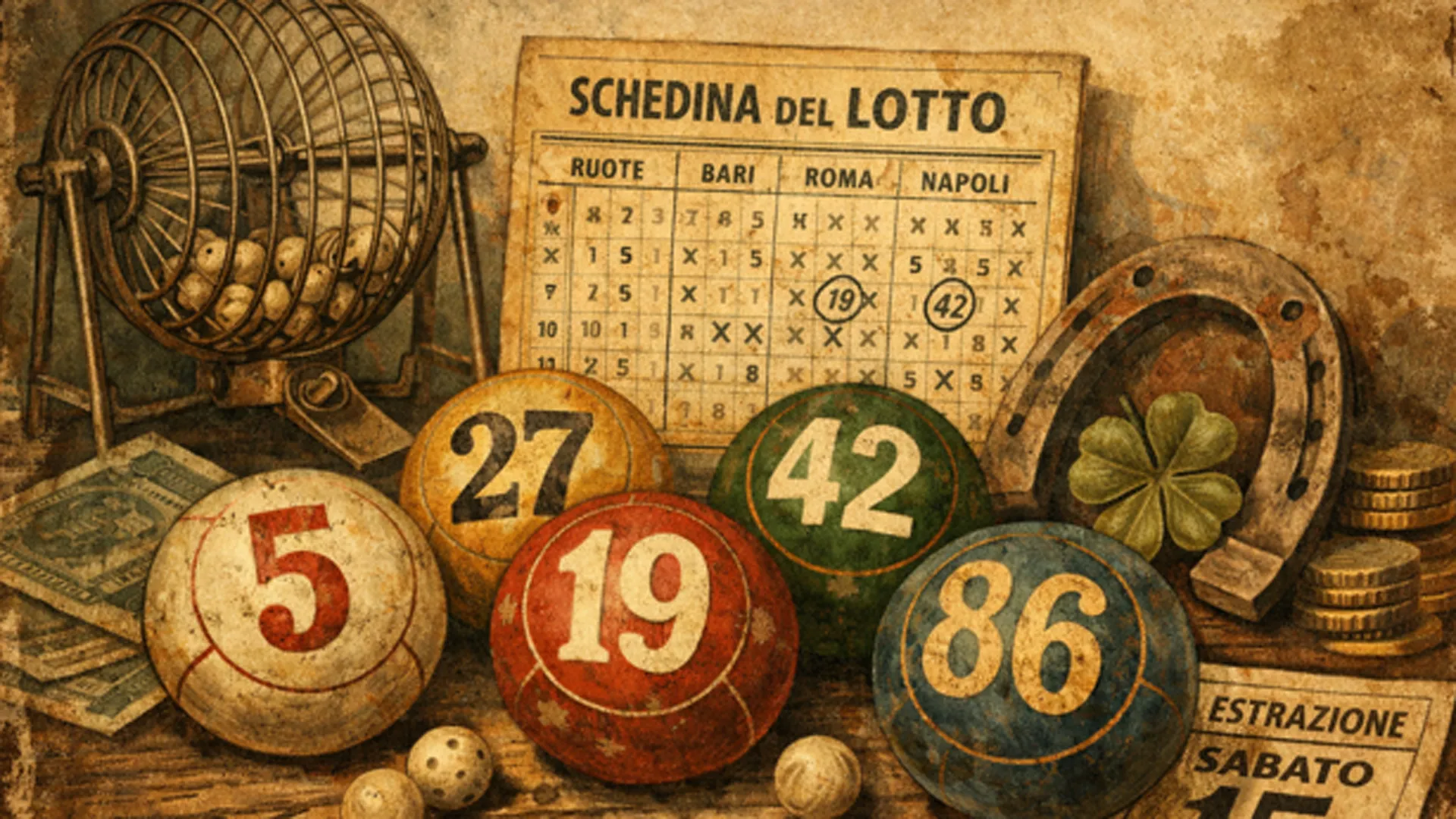
The Italian Lotto has always published delay statistics, wheel by wheel. That data, born as neutral information, became an editorial product over the years: magazines, columns and whole websites built on the list of "overdue" numbers. An entire gambling culture formed around the idea that delay is a signal.
Why the Reasoning Fails
Draws, wheels, dice and shuffled decks have no memory. The probability of the next event is not affected by how many different events preceded it. If a total of 7 on two dice has a 16.67% probability, it stays 16.67% on the next roll, whether the last twenty rolls were all sevens or none.
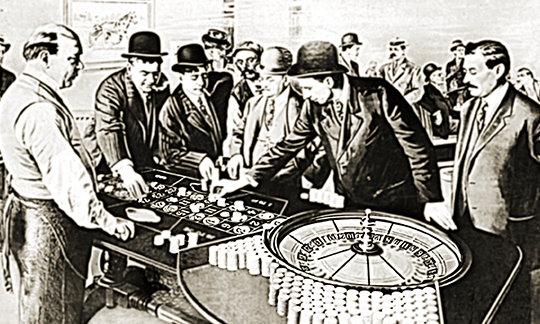
This mistake has a name — the gambler's fallacy — and a famous episode: in 1913 at the Monte Carlo casino the ball landed on black twenty-six times in a row. As the streak grew, players staked ever larger sums on red, convinced it was "due". Did the house lose? No, the crowd did: every spin was independent and the streak owed nobody anything.
The Confusion With the Law of Large Numbers
The law of large numbers says that over a huge number of trials, observed frequency approaches theoretical frequency. Many translate this as "deviations must be compensated". They are not: deviations are not corrected, they are diluted. If after 100 rolls you have 20 excess outcomes, after a million rolls those 20 still exist but weigh nothing in percentage terms. No rebalancing force ever steps in.

So Why Track Statistics at All?
Because they describe rather than predict — and that difference is everything. Looking at a table's data helps you:
- understand a game's real volatility, meaning how long the runs without wins can get;
- verify that frequencies observed over large samples match declared ones;
- right-size expectations: seeing a bonus skip 60 rounds is normal takes the power out of the "it's about to hit" illusion.
An honest drought counter is an awareness tool, not an oracle. Anyone selling it as a prediction system is selling the fallacy, not the data.
The Test You Can Run Yourself
Take the history of any tracked table and count how many times, after ten rounds without a given outcome, that outcome appeared on the next round. Then compare the percentage with the theoretical probability. On large enough samples the two match: practical proof that delay carries no information.
→ Live table histories and statistics
Responsible Gambling
Online gambling should be a form of entertainment, not a source of income. If you feel gambling is becoming a problem, free support resources are available:
- ADM — Responsible Gambling
- GiocoHelpline freephone: 800 558822 (free, 24/7)
- Every ADM casino offers self-exclusion tools, deposit limits and reality-check reminders of time played.